
Mining
Bring haulage, support vehicles and maintenance into view.
Build an operational picture of surface mining and quarry fleets, using compatible telematics and evidence to support site teams and equipment owners.
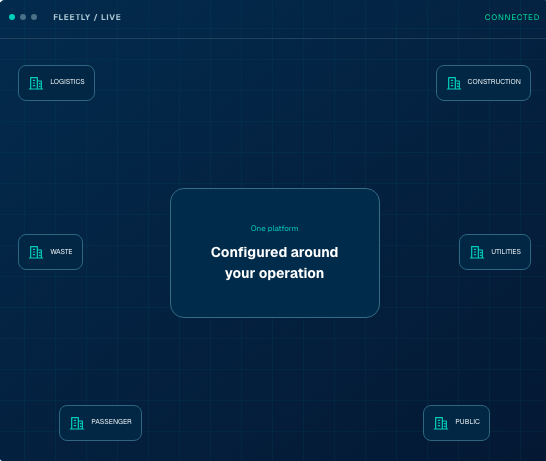
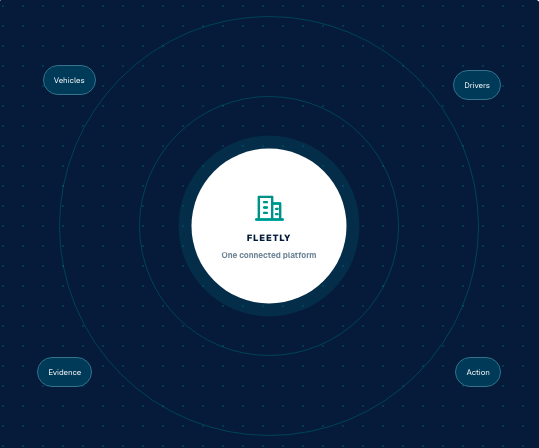
- Configured around your vehicles, drivers and operation
- Haul trucks
- Loaders & excavators
- Light support vehicles
- Service & fuel vehicles
Surface operations, connected
The right context changes the decision.
Large mobile equipment, smaller support vehicles and changing work areas make mining fleet management highly site-specific. Fleetly can support visibility and review workflows, but useful deployment starts with the operating environment, equipment compatibility and communications coverage—not an assumption that road-fleet hardware fits every machine.
CONNECT WHAT MATTERS
Fleet capabilities with a clear operational purpose.
Build a solution around the data you can trust and the actions your teams need to take.
01
Equipment and support-fleet visibility
Assess available positions and site assignments across compatible heavy equipment and support vehicles.
02
Haul-cycle context
Use validated position and equipment signals to analyse the timing of loading, travel, unloading and return where reliable event definitions are available.
03
Maintenance from available signals
Bring supported engine hours, faults and service context into equipment maintenance planning.
04
Reviewable safety evidence
Investigate available camera and event records in the context of haul roads, loading areas and vehicle interactions.
THE OPERATIONAL WORKFLOW
A haul cycle with evidence at every stage.
A practical sequence for your team, with a named owner at each handover.
01
Load area
02
Haul route
03
Unload area
04
Return & inspect
MEASURE WITH CONFIDENCE
Define success before you start.
Use a representative baseline and comparable operating periods. These are suggested measures, not claims of achieved customer results.
Cycle-data completeness
Haul cycles containing the required validated stage events, not merely inferred GPS stops.
Equipment availability
Time equipment is released for planned work within the agreed operating period.
Unplanned maintenance time
Recorded equipment downtime outside scheduled maintenance.
FROM ASSESSMENT TO OPERATION
Start with a deployment that fits.
Agree equipment, data ownership and acceptance criteria before scaling. A representative pilot should prove the complete workflow, including exceptions and handover.
GNSS-based visibility is not underground positioning. Underground or hazardous-area use needs specialist assessment and suitable approved equipment. Fleetly is not a certified proximity-detection, collision-avoidance or autonomous haulage control system.
Capabilities depend on supported devices, approved integrations, available data and enabled modules. Confirm the production scope during solution design.
Start with a surface-operation pilot and a documented equipment compatibility assessment.
Survey coverage and agree how delayed or missing data will be displayed.
Validate hardware suitability for dust, vibration, temperature and the installation environment.
COMMON QUESTIONS
Clear answers for your industry.
Can Fleetly track vehicles underground?
Do not assume standard GNSS or mobile connectivity will work underground. A specialist positioning and communications design would need separate assessment.
Can we calculate tonnes moved from GPS?
No. Payload or production totals require reliable weighing, payload or production-system data and a validated integration.
Does telematics replace segregation or site controls?
No. Fleet information supports management and review; the mine or quarry retains its approved traffic and safety controls.
KEEP EXPLORING
Practical resources for your next step.
Follow the closest customer journey or return to Fleetly One Platform to see how every part works together.
Documentation
Device commissioning and handover
The evidence to capture before accepting a vehicle installation.
Documentation
Fleet data and identity reference
Core entities and relationships for an integration discovery workshop.
FLEETLY FOR MINING
Build a clearer picture of your operation.
Discuss your fleet, existing technology and the decisions you want to improve.